
Instability Knee Braces
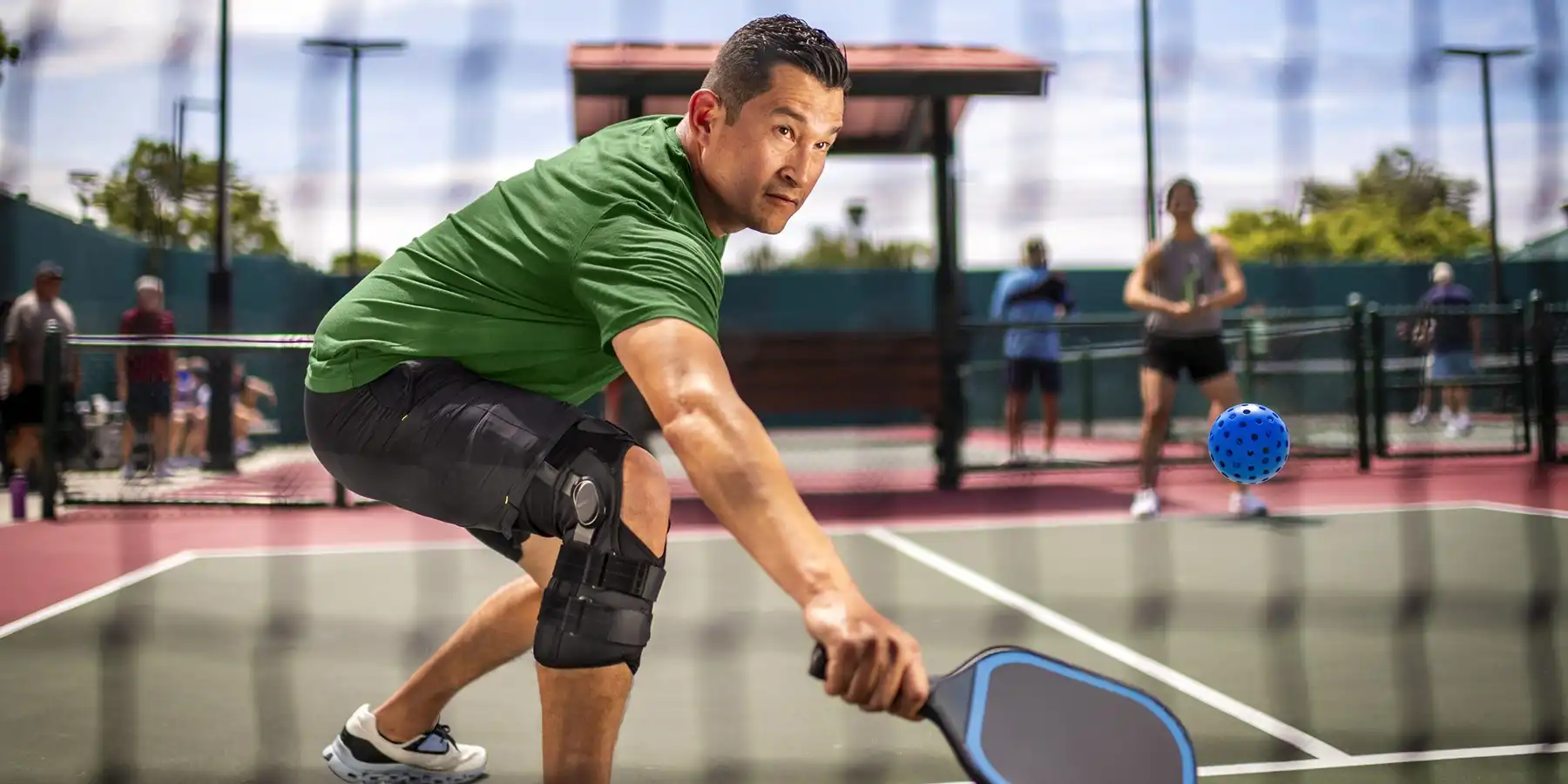
Designed to support unstable knees, these braces help manage ligament injuries and muscle weakness. They are often used after surgery, like ACL reconstruction, to protect the knee and support healing. Some can be adjusted to limit how much the knee bends, reducing strain on injured tissues.
Ligament Instability Braces
These braces are designed to stabilize the knee after injuries to the Anterior Cruciate Ligament (ACL), Posterior Cruciate Ligament (PCL), Medial Collateral Ligament (MCL) and/or Lateral Collateral Ligament. These braces are used for people who are recovering from surgery or dealing with knee instability.
How They Work:
- ACL Braces: ACL tears cause instability, especially when the knee is in motion (like during running or pivoting). ACL braces limit the knee’s range of motion and prevent excessive twisting or bending to avoid further damage.
- PCL Braces: These protect the posterior (back) side of the knee. PCL braces focus on controlling the backward movement of the tibia (shin bone) relative to the femur (thigh bone).
- MCL Braces: MCL injuries affect the inner side of the knee. MCL braces offer support to prevent the knee from collapsing inward and help control side-to-side movement.
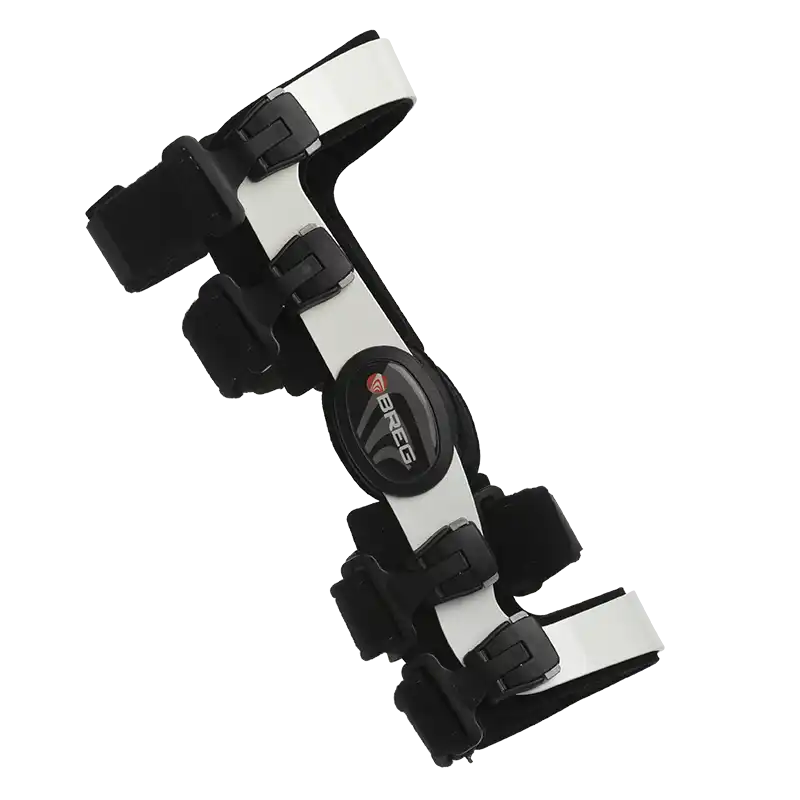
Mechanics: All of these braces use hinges and supports to limit excessive motion (like twisting or hyperextension), preventing further damage to the ligaments. They may also incorporate straps for better fit and stability.
Ligaments of the Knee
The knee is stabilized by two main groups of ligaments: the collateral ligaments and the cruciate ligaments. Together, these structures provide stability, control movement, and protect the knee from excessive forces during daily and athletic activities.
The collateral ligaments include the medial collateral ligament (MCL) and lateral collateral ligament (LCL). These ligaments primarily stabilize the knee during side-to-side (valgus and varus) movements.
The cruciate ligaments include the anterior cruciate ligament (ACL) and posterior cruciate ligament (PCL). These ligaments cross within the knee joint and play a key role in controlling forward, backward, and rotational movements of the knee.
Anterior Cruciate Ligament
Anterior Cruciate Ligament
The ACL is one of the most commonly injured ligaments in the knee. It runs from the tibia (shin bone) upward and backward to attach to the femur (thigh bone). Its primary function is to limit forward movement of the tibia relative to the femur and to provide rotational stability to the knee.
ACL injuries most often occur during non-contact movements such as sudden deceleration, abrupt stopping, pivoting, or quick changes in direction. As a result, ACL injuries are commonly associated with sports but can also occur during workplace incidents, motor vehicle accidents, or slips and falls.
Posterior Cruciate Ligament
Posterior Cruciate Ligament
The PCL is part of the cruciate ligament group and runs in the opposite direction of the ACL, forming an “X” within the knee joint. Its primary role is to limit backward movement of the tibia relative to the femur and to help control rotational stability.
PCL injuries are less common than ACL injuries and are typically associated with direct impact to the front of the knee, such as during contact sports or motor vehicle accidents (often referred to as “dashboard injuries”). Hyperextension or excessive force through a bent knee can also strain or injure the PCL.
Medial Collateral Ligament
Medial Collateral Ligament
The MCL is located on the inner (medial) side of the knee and runs from the medial femur to the medial tibia. Its main function is to resist inward forces on the knee, helping prevent excessive medial movement and a “knock-knee” tendency.
The MCL is one of the most frequently injured knee ligaments. Injury commonly occurs due to a direct blow to the outside of the knee or from twisting and rotational forces, particularly during sports or falls.
Lateral Collateral Ligament
Lateral Collateral Ligament
The LCL is found on the outer (lateral) side of the knee and runs from the fibula to the lateral femur. It plays an important role in stabilizing the knee against outward forces and excessive external rotation.
LCL injuries are less common than MCL injuries and typically occur due to a force applied to the inner side of the knee, alongside hyperextension, or significant trauma. These injuries are often associated with high-impact activities or accidents.
